How UK Operators Manage Real-Time Data Streams for Live Multi-Sport Events on Mobile Platforms
Written by Ines Hughes · Oct 16, 2026
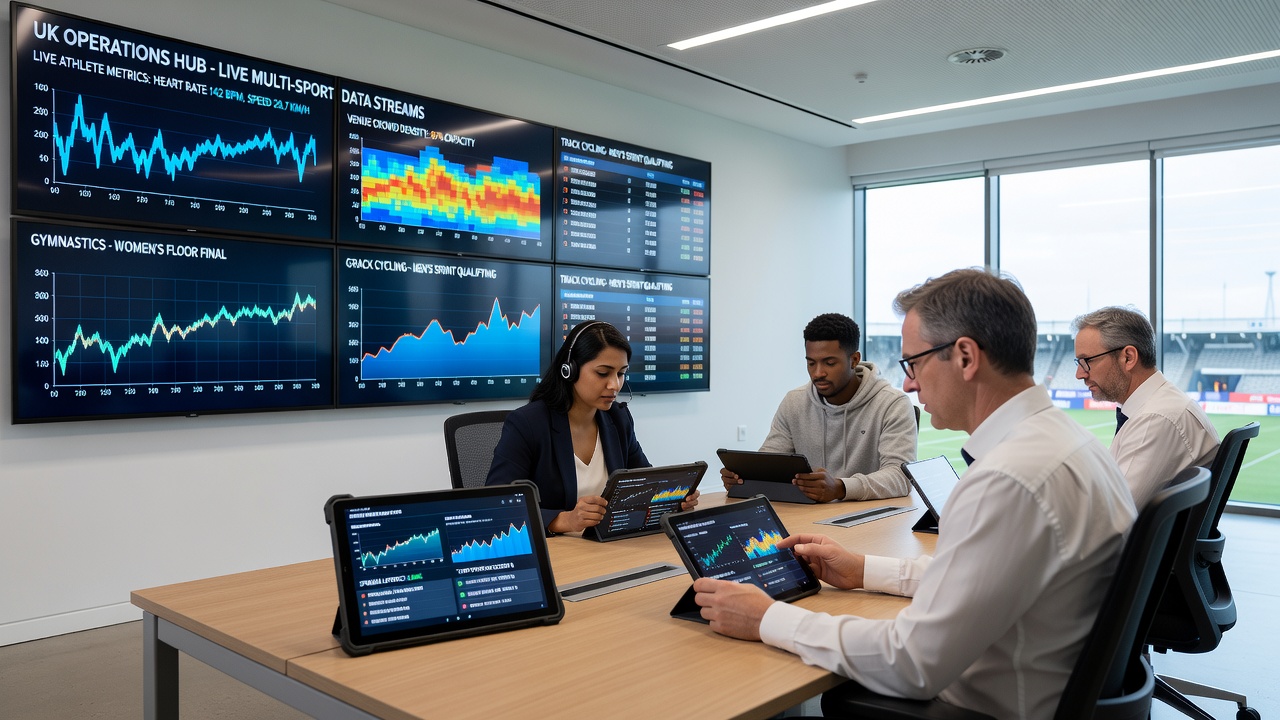
How UK Operators Manage Real-Time Data Streams for Live Multi-Sport Events on Mobile Platforms
Data Ingestion from Multiple Sports Feeds
UK operators pull raw feeds from stadium sensors, official timing systems, and third-party data providers during events such as rugby internationals and cricket test matches, then route those packets through dedicated ingestion layers that timestamp every update before further routing occurs. These layers handle simultaneous inputs from football fixtures, basketball leagues, and horse racing tracks by normalizing formats into a unified schema that downstream systems can process without custom parsing for each sport.
Engineers configure message queues to prioritize high-velocity data like ball-tracking coordinates over slower updates such as team line-up changes, while load balancers distribute incoming streams across regional data centers to prevent bottlenecks during peak multi-sport weekends. Research from the European Gaming and Betting Association indicates that average ingestion latency for combined sports events has dropped below 150 milliseconds in production environments as of October 2026.
Processing Pipelines and Synchronization
Once ingested, the data enters stream-processing frameworks that apply business rules for odds recalculation, statistical aggregation, and alert generation across different sports at the same time. A single pipeline might adjust cricket run-rate projections while simultaneously recalibrating rugby try-scoring probabilities, all within the same cluster of compute nodes that share memory caches for cross-sport correlations.
Operators synchronize these outputs with live video and audio streams so mobile users see consistent information whether they watch a basketball quarter or follow a tennis set, although the article avoids specific market details already covered elsewhere. Synchronization relies on precision time protocol servers that align clocks across all data sources, reducing drift that could otherwise cause mismatched displays on user devices.
Mobile Delivery and Edge Optimization
Processed streams travel through content delivery networks with edge nodes positioned near major UK population centers, allowing mobile apps to receive updates via WebSocket connections that maintain persistent sessions even when users switch between Wi-Fi and cellular networks. Developers implement adaptive bitrate streaming for video components while keeping data payloads lightweight through protocol buffers that compress numeric fields more efficiently than JSON.
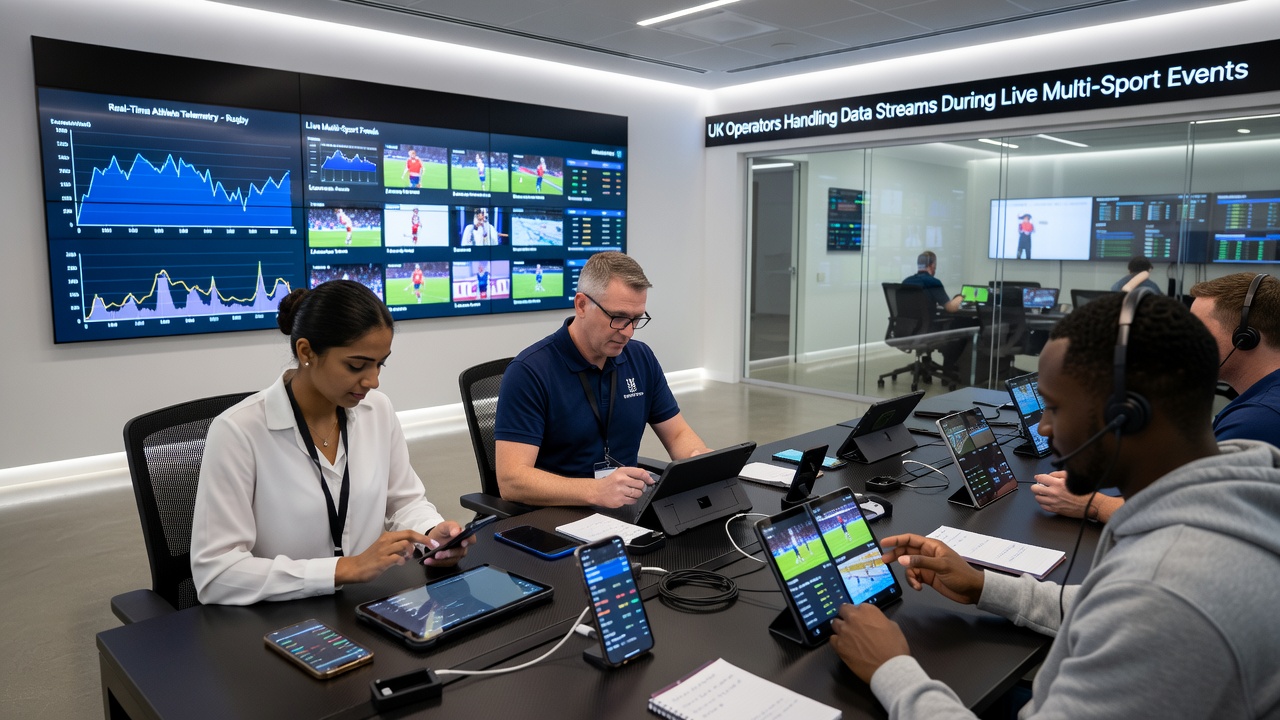
Device-side caching stores recent snapshots locally so brief network interruptions do not interrupt the user experience, and background workers reconcile any gaps once connectivity returns. Figures from a University of Melbourne study on distributed systems show that edge caching reduces perceived latency by up to 40 percent during high-concurrency live events.
Scaling for Concurrent Multi-Sport Activity
During periods when several major competitions overlap, such as domestic rugby leagues running alongside international cricket series, operators auto-scale containerized processing tasks to match incoming message rates that can spike tenfold within minutes of a key incident. Auto-scaling policies monitor queue depths and CPU utilization, spinning up additional instances in cloud regions that comply with data residency rules.
Capacity planning teams review historical telemetry from past multi-sport calendars to forecast resource needs, adjusting thresholds so that neither over-provisioning wastes costs nor under-provisioning risks dropped updates. Observers note that these elastic approaches have become standard practice among larger UK platforms handling simultaneous streams from five or more sports.
Security Measures and Redundancy
Encryption covers all data in transit and at rest, with keys rotated automatically every few hours to limit exposure windows. Redundant ingestion paths run in parallel across separate physical locations so that a fiber cut or regional outage does not halt delivery to mobile clients. Failover logic detects packet loss above defined thresholds and switches primary routes within seconds, preserving stream continuity.
Regular penetration testing and anomaly detection models scan for unusual traffic patterns that might indicate attempted interference, while audit logs record every transformation step for post-event review. These controls align with broader digital infrastructure standards referenced in reports from the Australian Communications and Media Authority.
Conclusion
UK operators combine ingestion layers, synchronized processing pipelines, and edge-optimized mobile delivery to maintain consistent real-time streams across diverse live sports calendars. The architecture supports concurrent events through elastic scaling and layered redundancy, while security protocols protect data integrity at every hop. As technology continues to evolve, these systems provide the operational backbone that keeps mobile platforms responsive during the busiest multi-sport periods.