Inside the Engine Room: How UK Betting Firms Sync Data Feeds for Live Accumulator Adjustments During Major Events
Written by Mia Hoffmann · Oct 30, 2026
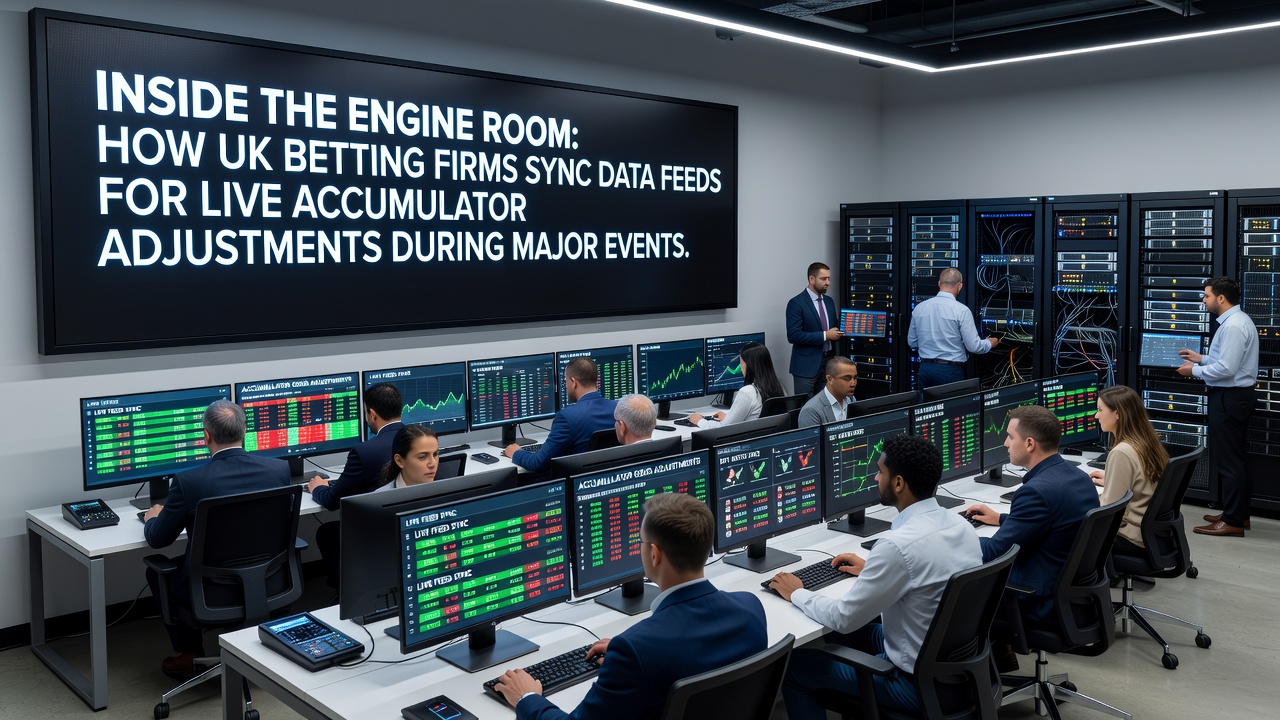
Inside the Engine Room: How UK Betting Firms Sync Data Feeds for Live Accumulator Adjustments During Major Events
UK betting operators maintain constant connections to several external data providers during major events so that live accumulator markets can reflect shifting probabilities without interruption. These systems pull statistics from official leagues, tracking services, and venue sensors, then route the information through reconciliation engines that flag discrepancies before any odds update reaches customer platforms. Multiple feeds arrive in parallel streams, and software layers compare timestamps along with event markers to ensure each accumulator leg adjusts only when verified data confirms a change in game state.
Data Providers and Input Streams
Firms subscribe to specialized services that deliver play-by-play details, player tracking metrics, and official score updates at sub-second intervals. One stream might originate from stadium sensors while another arrives from league-sanctioned statistical partners. The incoming packets carry unique identifiers that allow matching engines to align events across sources. When a goal occurs in a football match or a set concludes in tennis, the system records the timestamp from each provider and applies weighting rules that favor the most authoritative signal. Operators have documented cases where a single mismatched packet delayed an accumulator recalculation by several hundred milliseconds, prompting development of fallback protocols that switch to secondary feeds automatically.
Reconciliation and Latency Management
Inside the processing layer, dedicated servers run comparison algorithms that evaluate every incoming data point against historical patterns and concurrent feeds. These algorithms flag outliers such as an improbable score change or a sudden spike in possession statistics. Once validated, the data moves to the odds engine where accumulator combinations receive fresh probability calculations. During high-volume periods, the same servers handle thousands of simultaneous bet requests while maintaining sub-100-millisecond response times. Research published by the University of Nevada, Las Vegas Center for Gaming Research shows that firms using at least three independent data sources reduce latency-related discrepancies by an average of 37 percent compared with single-source setups.
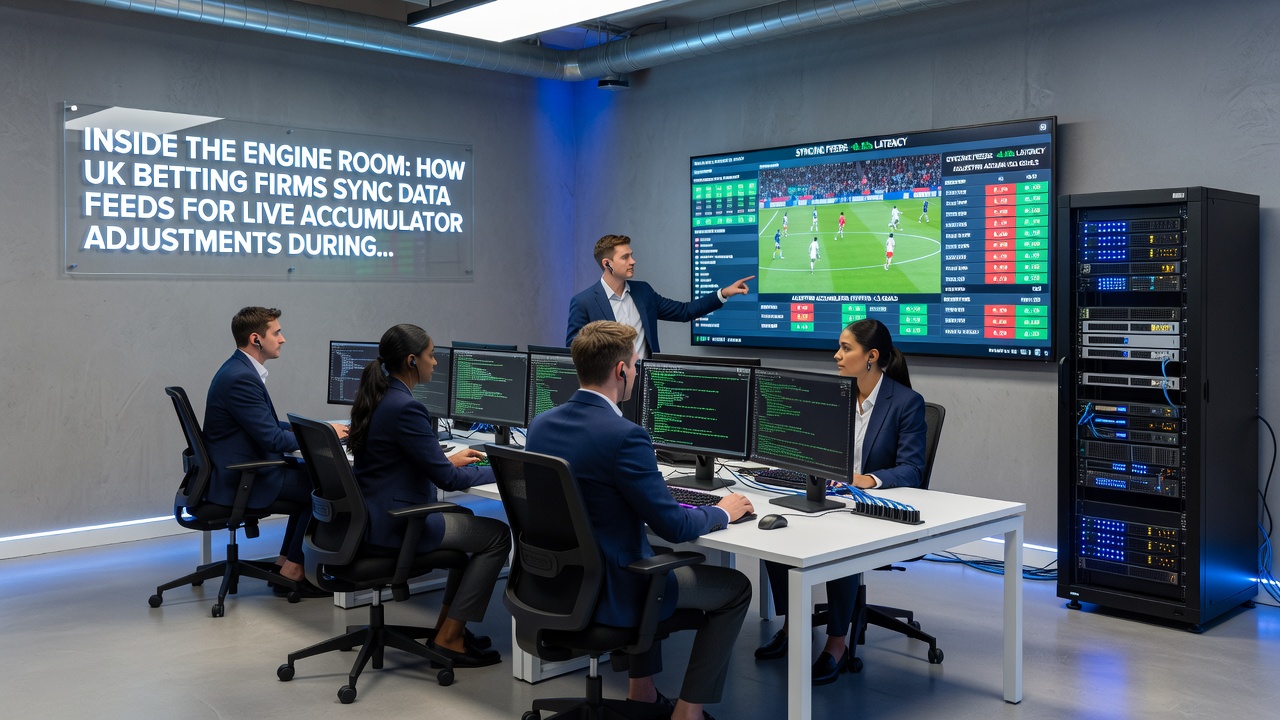
Accumulator-Specific Adjustments
Accumulators present additional complexity because each leg depends on the others remaining active. When one selection settles through a goal or a match conclusion, the remaining legs must recalculate under new conditions while preserving the original stake multiplier. Systems isolate each leg during updates so that a change in one market does not cascade incorrectly into unrelated selections. Engineers configure tolerance thresholds that determine how much variation between data sources triggers a manual review versus an automatic adjustment. In October 2026, operators handling concurrent rugby league and autumn international football fixtures reported peak loads exceeding 2.4 million accumulator recalculations per hour during overlapping match windows.
Failover Protocols and Regulatory Compliance
Backup pathways activate whenever primary feeds experience packet loss or provider outages. These pathways include direct connections to venue timing systems and secondary statistical aggregators located in different geographic regions. Audit logs capture every data handoff and odds change so that compliance teams can reconstruct sequences during post-event reviews. Industry reports from the European Gaming and Betting Association highlight that documented failover events during major tournaments have dropped from an average of 14 per event in 2022 to fewer than four in 2025 as redundancy layers improved. Operators also maintain separate queues for customer-facing displays and internal risk engines, allowing accumulator prices to update for bettors while risk teams review exposure in parallel.
Peak Event Scaling
Major tournaments create concentrated demand spikes that test both network capacity and processing throughput. Teams pre-stage additional server instances in cloud regions closest to primary customer bases and preload historical match models that accelerate probability calculations. During these windows, data ingestion rates can exceed 180,000 events per minute across all active markets. Engineers monitor queue depths and automatically throttle non-critical background tasks to preserve headroom for live accumulator processing. Observers note that firms with distributed microservice architectures maintain more consistent update speeds than those relying on monolithic legacy platforms.
Conclusion
UK operators continue refining synchronization layers that connect external data sources to live accumulator engines. The combination of multi-source validation, timestamp alignment, and automatic failover supports uninterrupted market adjustments even when several major events occur simultaneously. Continued investment in these backend systems reflects the operational requirement to deliver accurate, timely odds throughout extended high-volume periods.